
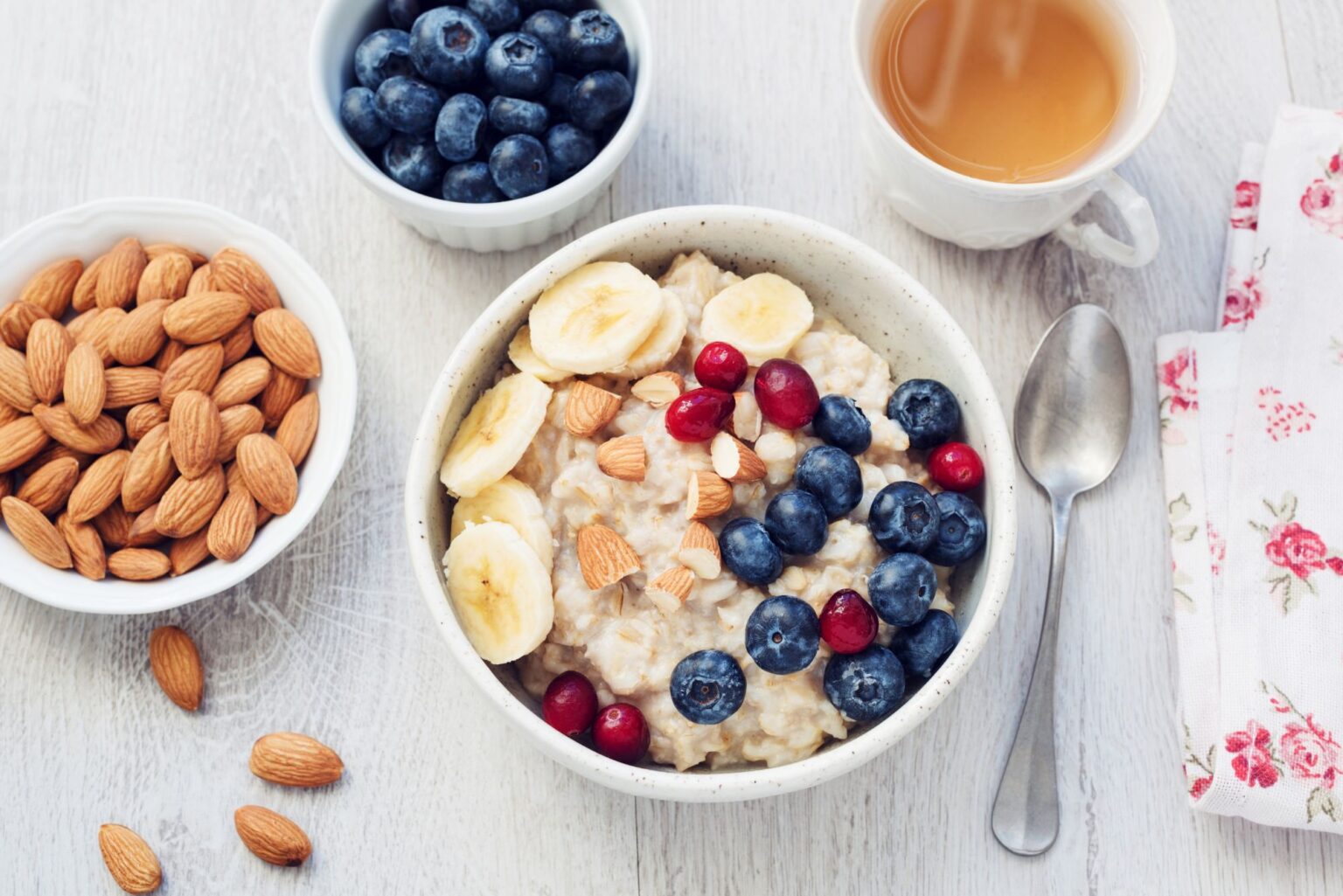

Hi Mike, what should I eat before an early parkrun? I’m more of an evening runner, but I want to start doing regular parkruns. I always end up with a stitch if I eat before running. But if I don’t eat, I feel weak. Any tips would be appreciated.
Amy
Running coach answer: What should I eat before an early parkrun?
There’s much written about diet and energy needs for active runners.
There are lots of rules that you can follow to make the most of your diet. This includes the quantity of carbohydrate required to fuel your daily activity and get ready for the next day’s activity, when and what to eat before and after a session or race, and sometimes what to eat during.
That’s just the carbohydrate side. Add to this the need for proteins, vitamins and minerals to help with repair and general good health. It can seem like a minefield.
My go-to book on sport nutrition to make sense of all this is Anita Bean’s “Sports Nutrition – the Complete Guide” (Bloomsbury). I find it easy to understand, explains the physiology and is full of practical advice, including recipes.
The general rules I take out of most of my reading: are to eat a small amount of carbohydrate before a morning run, eat a mix of carbohydrate and protein within the 20mins after, to start the process of glycogen storage and muscle repair, have a midday meal, which is most important if you are training in the evening or twice a day, and a post session meal, after an evening session.
It’s my non-scientist takeaway!
At the end of the day, we are all examples of ‘one’. We all have different routines, work timetables, levels and training frequency, tolerances to eating before exercise (and after). The rules will vary for each of us.
Ultimately, the key is to find what works best for you.
Eating a small amount of carbohydrate shortly before exercise can encourage your body to use carbohydrate as fuel and may help delay fatigue. But that only matters if you can comfortably eat before running. For a parkrun, you probably don’t need to worry about it anyway.
On average, a runner will burn about 100 calories per mile, depending on their weight, how hilly a route is and their running speed.
So, in a parkrun most runners will use between 300 and 450 calories. That’s about as many calories as you will replace after the parkrun by eating a celebratory cake!
The average runner will have a store of around 1200 to 1600 calories in skeletal muscle. Unless you have been fasting, you easily have enough energy to get around a parkrun.
As I get older, I find I can’t eat before a run. I can usually take a cup of tea, and, sometimes, if it is an hour or more before running, a banana or energy bar might settle.
Nowadays, I turn up at morning races without having breakfast.
I don’t find that I suffer in races because of it; from the half marathon distance downwards, I certainly don’t suffer from fatigue due to glycogen depletion. I am no longer a performance-driven runner though.
For my best marathon years, between 1979 and 1983, I was teaching full time and running twice a day – usually three times on a Friday in the winter, with the school cross country club run added.
Eating became an issue!
I am not a morning person, and a 6am breakfast wasn’t going to happen. I took to fasted morning runs.
On my five-mile morning run, I would have nothing before it; having some cereal in the staff room once I had arrived and before teaching. I backed it up with plenty of snacks, lunch and dinner, to make sure I was fuelled for the next day.
Dinner was usually a big meal, with meat, lots of carbs, in the form of potatoes, rice or pasta (whole grain), green vegetables, pepper, onions and garlic. My mother was an army-trained cook, so I had an idea of what a wholesome meal looked like (and I could cook, too!)
Back to the fasted runs. I went to a Team GB marathon squad weekend at Alsager College in 1980, where the key speaker was Dr David Costill, probably the UK’s most prominent running physiologist and nutrition expert at the time.
Part of the conversation was the carbohydrate-bleed-out diet and fasted runs. It was suggested that fasted running could help endurance runners be more efficient fat burners.
By default, I was doing fasted morning runs – I believe they worked as I made great improvements (from 2.21 to 2.09 in three years).
However, in the mix I had also increased my running frequency to 15 runs per week – so it may not have been just fasted runs!
To go one step further, I ran a few marathons on a very minimal breakfast, because they started early in the morning. At the Commonwealth Games in Brisbane, 1982, the marathon was an early start, and it started downtown, not near the athletes’ village. So we were up early to get the transport there.
There were some fruit-flavoured yoghurts in the fridge in our shared accommodation, and bananas available. I ran a personal best of 2.12.06 to take the bronze medal on a small yoghurt pot and a banana!
“I ran a personal best of 2.12.06 to take the bronze medal on a small yoghurt pot and a banana!”
Mike Gratton – London Marathon Winner 1983
The night before, I had a meal that was essentially a huge pile of potato croquettes. It was an unusual meal, eaten just as Queen Elizabeth was visiting the Games Village. She came through the refectory, noticed my plate piled high with croquettes, and asked me about it. I briefly explained that they were the only carbohydrates available at the serving hatch, and that I was running a marathon the next day.
In Manila, the marathon started at 5 am because of the heat; the first hour was run in the dark. I decided not to have any breakfast and, again, eat a fair amount of carbohydrate in the evening before. I finished second in Manila, leading all the way but overtaken by a Chinese runner at the end as the heat started to get to me.
Before winning London in 1983, I can readily recall having a small bowl of cornflakes with sugar and milk, two slices of white toast with jam, and tea. There was no on-course nutrition (in those days), just water, yet I managed to run a PB of 2.09.43 on that!
I am not suggesting that any of this is scientifically sound advice – it is and it isn’t, I guess.
What it is, is how I looked at my nutritional needs as an endurance athlete and managed to find an eating routine that suited my early morning run to work, my daily activity as a PE teacher and the bigger training session in the early evening.
In the end, understand the need to fuel, refuel and repair, then find what works for you – do a few short races with no breakfast – you might find that you never needed that energy bar or gel, after all.
Join our mailing list to stay up to date with the latest UK running events, training tips, and exclusive offers on running products. Rest assured, we value your privacy and would never dream of selling your address. Sign up now…

Share this article


The pitter-patter of feet on the pavement, the rhythm of your breath, the wind in...
When you say ‘finish at’ marathon pace, should there be a block at marathon pace?...
Hi Mike, I’m 43 and have run four marathons, with my most recent finish being...
I have a spring marathon, I’m a beginner and never done a marathon. I see...

As humans, we all experience moments of grief and stress at some point in our...
As a runner, you’re no stranger to the physical benefits of lacing up your shoes...
We’re here to make sure you’re up-to-date with the latest running tips, events and product discounts – we’ve always got your back! Rest assured, we value your privacy and would never dream of selling your address.
BONUS: Sign up today and receive a FREE code for our Sub-4-Hour Marathon Plan
Your privacy settings
Manage Consent Preferences
Necessary
Analytics
Embedded Videos
Marketing
Facebook Advanced Matching
Facebook CAPI